
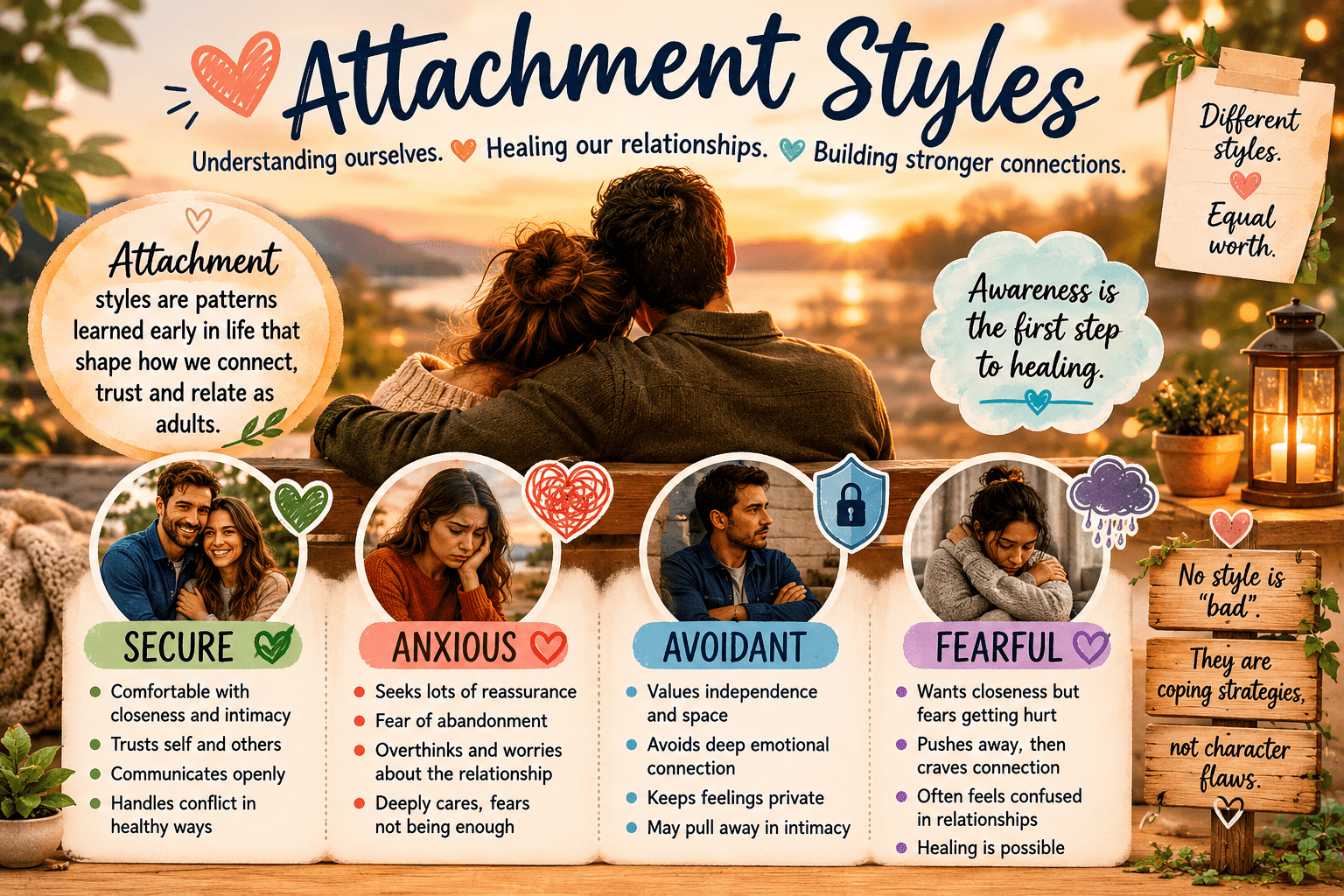
How Attachment Styles Shape Adult Relationships
By Savannah Pierce Walker, LPC
How often do you feel like you’re in the same loop with your partner? Maybe you’re the one that pursues harder when things get tough, or maybe you avoid the heck out of it. Maybe when you really get down to it, you have trust issues, fear of abandonment, or feel responsible for everyone’s else emotions.
Often times, we tend to beat around the bush instead of looking at a problem head-on and finding a solution. Many times, your attachment style contributes to the problem. Attachment comes from studies done on infants and how they interact with their parents. They found that once an infant grows up, how they were parented often contributed to how they conducted themselves in relationships as adults. Not in a “blame everything on my parents” way, but in a way that continued the pattern experienced as a child into adulthood.
Attachment has become a bit of a buzzword so let me make one thing clear: having an insecure attachment is not a license to keep doing what you’re doing. There’s no improvement in “oh, I’m just this way because I have a _________ attachment style, so deal with it”. I like to say that it’s kind of like you’re a boxer preparing for a big fight- you’re going to want to know your opponent to know what you’re up against. That’s how I like to use attachment when I work with couples.
What is Attachment?
Attachment is how we answer a single question: what happens when I need someone? Do you run away, run towards, a mix of the two, or do you know your needs can be met
Naturally, when a child is scared, excited, overwhelmed, or needs help, they look to their caregivers. Time reveals patterns:
- Does someone come when I call?
- Are my feelings handled with love and care?
- Can I depend on others?
- Do I have to handle everything myself?
As we grow up, the pattern we learn tends to grow with us. If you spend your first 20 years of life thinking everyone is not safe and dependable, do you think that magically disappears into adulthood?
Secure Attachment: “I can depend on others, and others can depend on me.”
Secure attachment doesn’t mean you’re perfect in relationships. It’s still possible to get hurt or jealous and have normal relationship conflicts. The difference is that conflicts don’t trigger an overwhelming feeling that the relationship is doomed.
Secure attachment can look like:
- Asking for what you need
- Trusting partners unless they have a logical reason not to
- Comfort with closeness and independence
- Setting boundaries without shame or guilt
People with secure attachment likely had reliable caregivers growing up.
Anxious Attachment: “People may leave, so I must stay alert and work hard to keep them close.”
Someone with an anxious attachment can constantly stay vigilant in relationships, looking for potential reasons that someone might leave. As soon as they feel someone pulling away, they cling harder, often prepared to do whatever it takes to keep them. This can contribute to being a “burnt out pursuer” over time, or over functioning in relationships.
Anxious attachment can look like:
- Overthinking interactions
- Constant need for reassurance
- Worrying about the relationship
- Feeling intense distress over conflicts, even the small ones
- Putting others’ needs before their own
People with anxious attachment likely had unreliable caregivers growing up.
Avoidant Attachment: “Relying on others ends badly, I must rely on myself”
Avoidant attachment often comes across as uncaring and dismissive. In reality, they learned that depending on others isn’t safe and, therefore, must keep things to themselves or leave before they get left. Vulnerability can feel too risky, and they tend not to be expressive of their emotions.
What it can look like:
- Valuing independence above almost everything else
- Feeling uncomfortable when things are emotionally tense, especially in relationships
- Pulling away when feeling vulnerable
- Downplaying needs/emotions
People with avoidant attachment likely had unavailable caregivers.
Anxious-Avoidant/Disorganized: “I want closeness, but it doesn’t feel safe”
Disorganized can feel like a push/pull dynamic. This can be like a mix of avoidant and anxious styles, often leaving both the person and the partner confused. It can be like saying “don’t leave me, but don’t get too close”.
It can look like:
- Craving intimacy but feeling overwhelmed by it
- Pursuing when feeling someone pulling away, but running when you feel pursued
- Difficulty trusting intentions or always needing to know intentions
- Strong emotional reactions and a fear of vulnerability
People with disorganized attachment likely had unpredictable caregivers growing up, who were a source of comfort AND fear. People with disorganized attachment likely experienced abuse, had addict caregivers, or parenting inconsistency.
Can I change my attachment style?
Yes! Changing your attachment style can be difficult, but it’s very possible! Therapy is invaluable in this!
Attachment styles are learned relationship patterns. Fortunately, what we learn can be unlearned. Often times, people logically know they can be secure with their partner while struggling to feel secure. Therefore, individual therapy can assist in learning how to trust yourself and your partner while couples therapy can aid in moving towards that secure attachment.
Self-awareness is a major first step here. You can’t change what you’re not aware of. See how much you recognize your attachment style showing up. What triggers it? What calms it? What makes you lose control over it? What is the underlying need when you feel it?
Often times, we get stuck in the same relationship patterns: always going for unavailable partners, always going for high-functioning partners, etc. When we have a corrective experience with a partner, it can aid the brain in gathering evidence that relationships can be different, which can be very healing.
The biggest piece that I often give clients is to tolerate discomfort. Learning to right this pattern is uncomfortable and avoiding that discomfort can leave us stuck.
Attachment styles themselves don’t cause problems in relationships. The problem comes from how the interaction itself takes place. Do you accept your impulsive response as objective truth? Do you hunker down and stick to your attachment style without understanding how it interacts with your partner? Those are the things that cause conflict.
It’s note-worthy that people with secure attachment styles aren’t untouchable with being triggered. However, instead of their triggers taking the drivers seat of their lives, they’re able to speak for their emotional experience instead of their emotional experience speaking for them. Healing is possible!
With offices in Lake in the Hills, St. Charles, Schaumburg, and Collinsville, Illinois (plus telehealth), our team is here to help you build the connections, confidence, and support system you deserve!
View the list of our clinicians to see who you feel like you would connect with the most.
Contact us to schedule an appointment now to start goal setting and planning:
📞 847-854-4333