
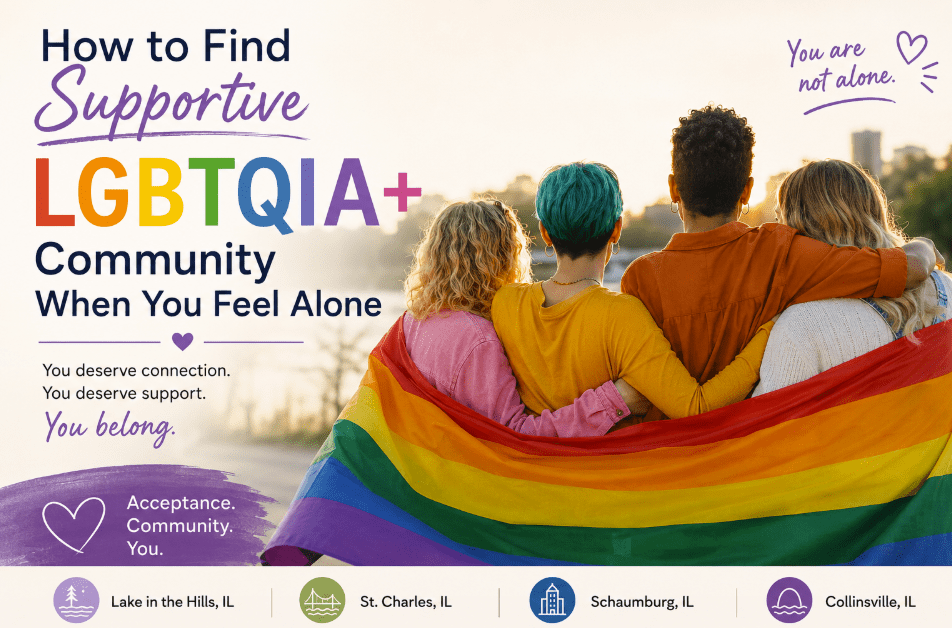
How to Find a Supportive LGBTQIA+ Community When You Feel Alone
By Krista Mueller, LCPC
June + Pride Month SO let’s talk about it!
Feeling like there’s no one to talk to or being unsure who to talk to can be incredibly difficult, especially when you’re navigating questions about your identity, facing discrimination, or struggling to find people who truly understand your experiences. For many individuals who identify as LGBTQIA+ and are a part of the community, loneliness can feel even more isolating when family, friends, coworkers, or community members don’t provide the support and acceptance they need or they are afraid to bring it up to them, not being sure how they’ll respond.
The good news is that supportive communities exist, and finding them can make a meaningful difference in your mental health, confidence, and sense of belonging. If you’re feeling disconnected, you’ve come to the right spot!
Why Community Matters
Humans are wired for connection. Having supportive relationships can help us manage stress, build resilience, and improve overall emotional well-being. For LGBTQIA+ identifying individuals, community can provide something especially powerful: the opportunity to be fully seen, accepted, and celebrated for who you are!
Research consistently shows that those who identify as a part of the LGBTQIA+ community who have access to affirming social support often experience:
- Lower levels of anxiety and depression
- Greater self-esteem and self-confidence
- Increased resilience during difficult times
- A stronger sense of belonging and identity
- Improved overall mental health
Finding people who understand your experiences can remind you that you are not alone—and that your identity is valid and worthy of acceptance.
Understanding Why You May Feel Isolated
If you’re struggling to find connection, it doesn’t mean you’re doing something wrong. Many factors can contribute to feelings of loneliness within the LGBTQIA+ community, including:
Lack of Representation
Depending on where you live, it may feel difficult to find other LGBTQIA+ individuals or affirming spaces that truly feel safe. This can create the belief that you’re alone in your experiences when, in reality, many others may be feeling the same way.
Fear of Rejection
Past experiences with discrimination, bullying, rejection, or misunderstanding can make it hard to trust new people or put yourself out there socially.
Being in a Period of Transition
Coming out, exploring your identity, starting college, moving to a new area, changing careers, or ending relationships can all temporarily disrupt your support system.
Internalized Messages
Many individuals have spent years receiving messages that they should hide parts of themselves. These experiences can impact self-esteem and make connection feel more difficult, even when supportive people are available.
Ways to Find Supportive LGBTQIA+ Community
Building community often happens one step at a time. You don’t have to immediately join large groups or attend big events if that feels overwhelming, though know it’s an option!
1. Look for Local LGBTQIA+ Organizations
Many communities offer LGBTQIA+ centers, advocacy organizations, support groups, and social events. These spaces often provide opportunities to meet others in a welcoming environment.
Consider exploring:
- Community centers
- Pride organizations (PFLAG is a well-known organization that lists resources, support, and more!)
- LGBTQIA+ social groups
- Educational workshops
Starting with a structured event or know organization can sometimes feel less intimidating than trying to meet people individually.
2. Join Support Groups
Support groups can provide a safe environment to discuss experiences, share challenges, and connect with people who understand what you’re going through. Google support or process groups near you!
Groups may focus on:
- General LGBTQIA+ support
- Transgender and nonbinary experiences
- Coming out journeys
- Family relationships
- Mental health concerns
- Young adults or older adults
These groups can offer both emotional support and practical guidance and help you find other areas of support/engagement!
3. Attend Community Events
Because June is identified as Pride Month, this month tends to be full of events, parades, and more, though events alike can occur yearround!
You might consider:
- Book clubs
- Game nights
- Art workshops
- Celebratory Events
- Educational presentations
- Parades
Shared interests can create natural opportunities for connection and friendship!
4. Seek Affirming Mental Health Support
Sometimes loneliness isn’t just about finding more people—it’s about having a safe place to process your experiences and build confidence in yourself.
Working with a therapist can help you:
- Navigate identity-related concerns
- Process experiences of discrimination or rejection
- Improve self-esteem
- Strengthen communication skills
- Build healthy relationships
- Develop strategies for finding supportive connections
Therapy can provide both emotional support and practical tools for creating a stronger support network, as well as develop a plan for finding outside, social support!
What If You’re Not Ready to Talk About It?
It’s important to remember that finding support does not require sharing your identity with everyone. Everyone’s journey is different, and safety should always be a priority.
If you’re not ready to talk about who you truly are publicly, you might:
- Join anonymous online communities
- Read LGBTQIA+ books and resources
- Attend virtual support groups
- Connect with a trusted therapist
- Explore affirming content creators and podcasts
You deserve support regardless of where you are in your journey!
Building Connection Takes Time
When loneliness has been present for a long time, it’s common to hope for immediate connection. In reality, meaningful relationships often develop gradually through small, consistent interactions.
Try to focus on manageable steps:
- Attend one event
- Reach out to one new person
- Join one support group
- Participate in one online discussion
Each small action can help create opportunities for future connection.
You Don’t Have to Navigate This Alone
If you’re feeling isolated, remember that there are people and communities who will accept you exactly as you are. Finding those connections may take time, but support is available.
At our practice, we are committed to providing an affirming, inclusive environment where individuals in the LGBTQIA+ community can explore challenges, build resilience, and strengthen their sense of self. Whether you’re navigating identity questions, relationship concerns, anxiety, depression, or feelings of loneliness, therapy can be a supportive place to begin.
With offices in Lake in the Hills, St. Charles, Schaumburg, and Collinsville, Illinois, our team is here to help you build the connections, confidence, and support system you deserve!
View the list of our clinicians to see who you feel like you would connect with the most.
Contact us to schedule an appointment now to start goal setting and planning:
📞 847-854-4333